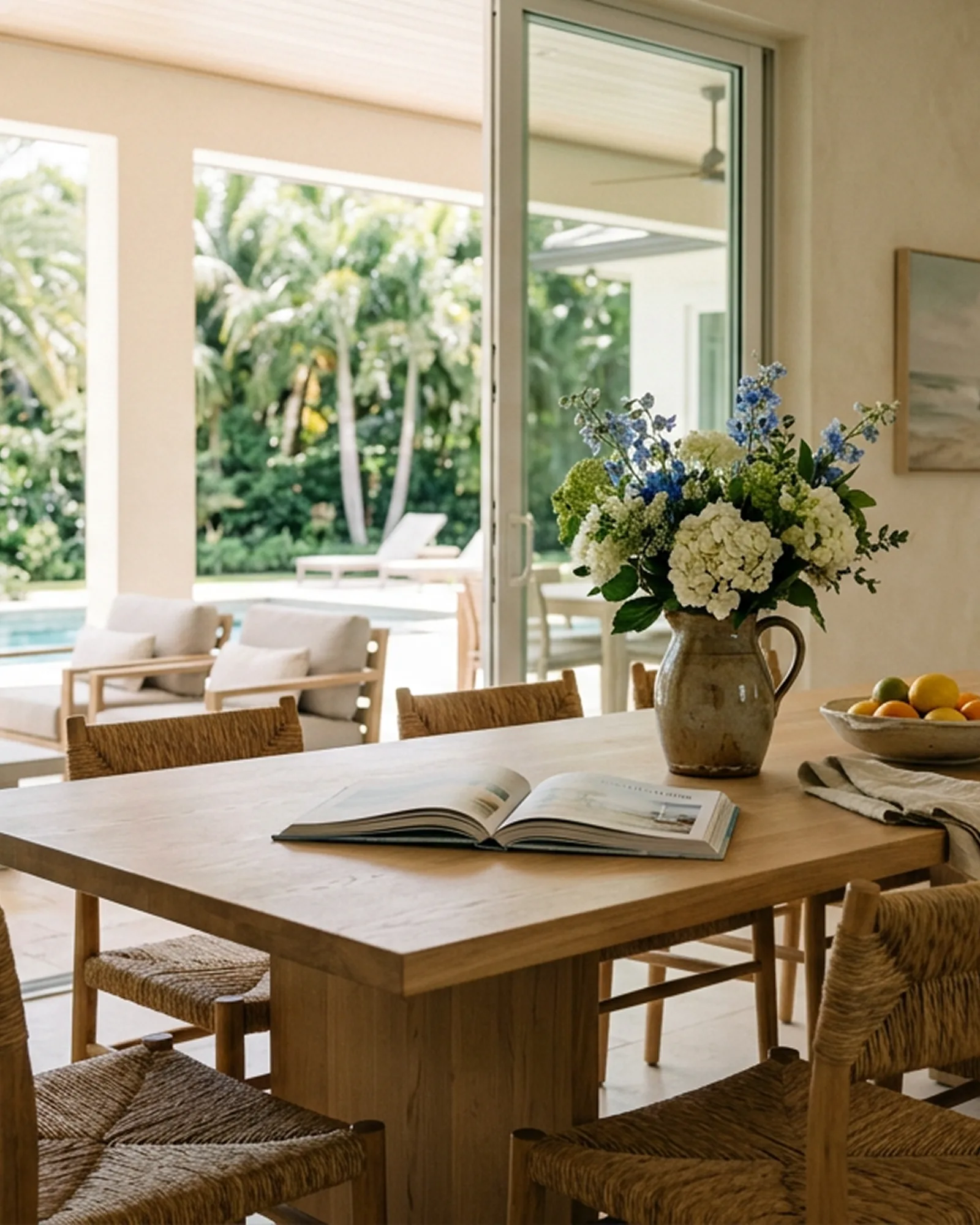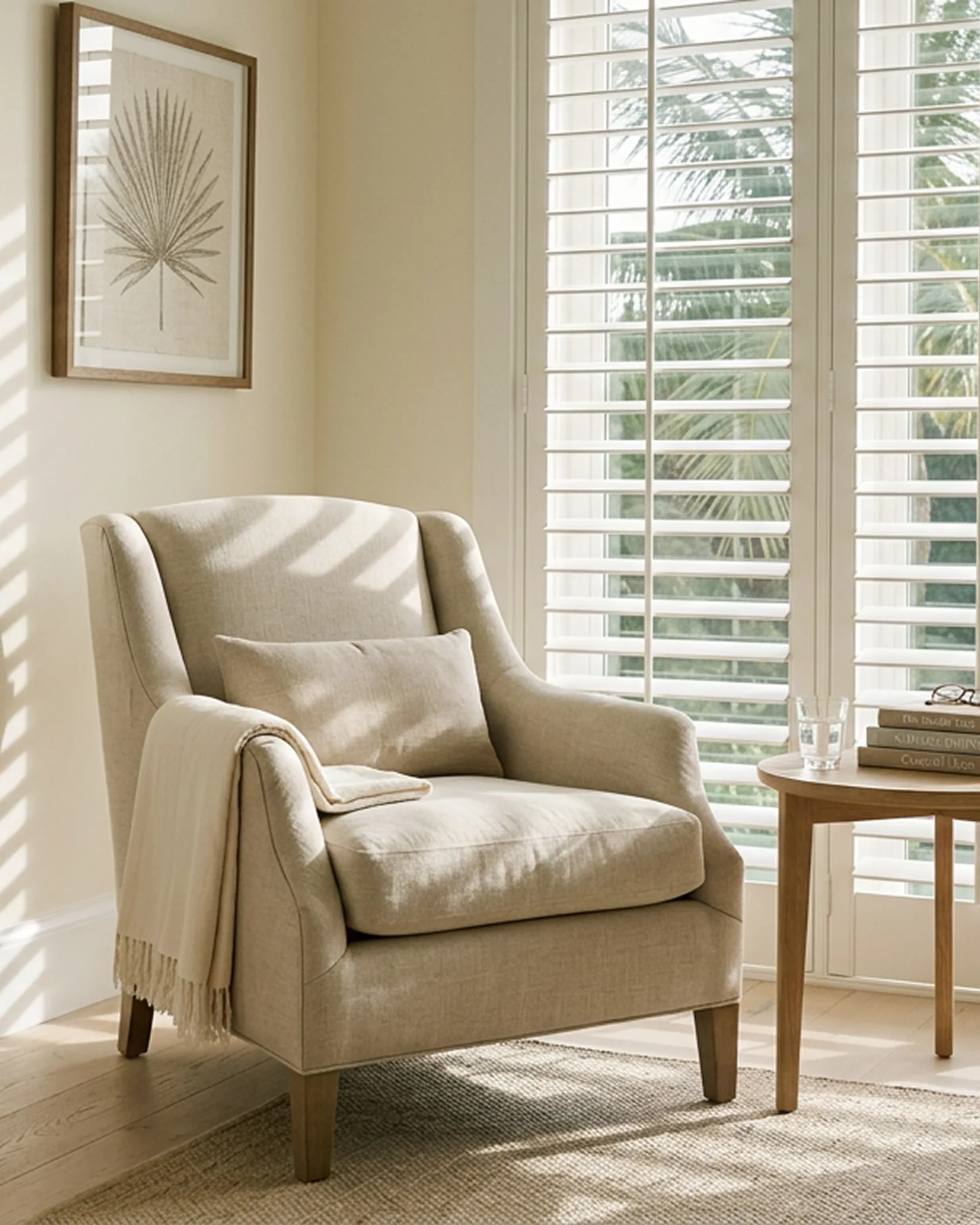
The Sunday House
The ease of a slow weekend is not an accident of the calendar. A home can be designed to offer it on an ordinary Tuesday.
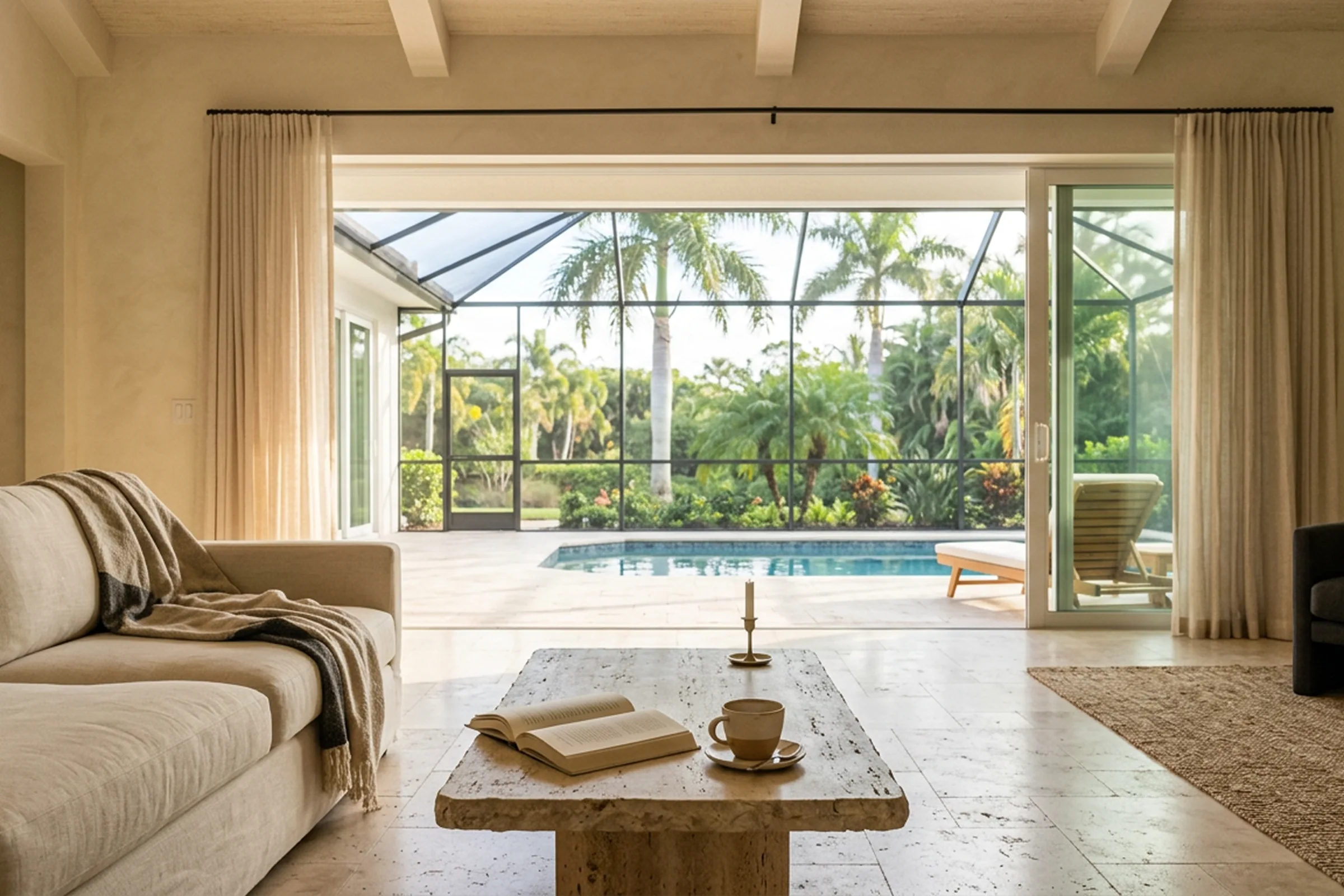
There is a particular kind of ease that belongs to Sunday. The morning moves differently. Coffee is poured without rushing out the door. Curtains stay open a little longer. Breakfast becomes something to sit down for, music plays somewhere in the background, and a book left on the table feels like an invitation rather than clutter. Even the house seems quieter.
In Naples, where many homes sit quiet through the summer and fill again in season, that Sunday ease is often kept for the weeks the house is fully lived in.
The feeling is usually credited to having nowhere to be. Perhaps more of it comes from finally inhabiting the house. The morning light gets noticed. The chair that is usually walked past is finally used, the dishes kept for company come out for no occasion at all, and nobody is in a hurry to leave the room.
Very little of that depends on the day of the week. Most of it depends on how the house has been arranged.
Designing for Ease
A beautiful home can impress the moment someone walks through the door. A thoughtful home does something quieter: it makes living there feel easier. There is a difference.
Ease looks like a kitchen where everything reached for each morning is exactly where it is needed, or an entryway that absorbs the inevitable collection of bags, shoes, keys and mail without allowing them to take over the room. It can be a reading chair positioned where the afternoon light naturally falls, a bedroom without visual noise, or a dining table that feels just as inviting for one person with a cup of coffee as it does for eight at dinner.
Organization does much of this work without being seen. When everything has a settled place, fewer small decisions stand between a household and its morning, and the rooms follow its habits rather than asking it to adapt. Lighting does the same at the other end of the day, changing the mood of a room once the work is put away so that the evening arrives on its own terms.
These decisions may never be the first things someone compliments about a home. They are often the things that change how it feels to live there.
Make Room for Ritual
Some of the most memorable moments at home are remarkably ordinary. The first coffee of the morning. Opening the windows when the weather changes. Lighting a candle before dinner. Pouring a glass of wine while something cooks on the stove. Reading before bed.
These small rituals create rhythm, and design can either support them or compete with them. If Sunday morning coffee is one of the week's favorite moments, the question is not which coffee machine looks best on the counter. It is whether the entire experience has been considered: where the mugs live, where the morning light enters, whether there is somewhere nearby that invites ten minutes of stillness instead of a cup carried back to a desk.
Good design pays attention to those moments. Not every ritual needs to be romanticized, but what a household repeats every day ends up shaping its experience of home.
A Little Less Performance
There is freedom in the Sunday house because it is not performing for anyone. The throw blanket can stay unfolded and the book open, and breakfast can happen at noon. The room is allowed to look lived in, because living is exactly what it is there for.
Everyday rooms deserve the same permission. For years, interiors have been presented as finished compositions: every surface styled, every pillow placed, every room perpetually ready to be photographed. A home is not a still life. It moves. It collects evidence of the people inside it: a glass on the bedside table, shoes by the door, flowers beginning to open on the kitchen counter, a stack of books that keeps changing. Its beauty belongs to them, rather than being held back for guests and special occasions.
Thoughtful design does not eliminate the traces of everyday life. It creates enough structure that life can happen without the home constantly feeling undone.
Protect the Pause
The modern home carries more responsibility than it once did. It can be an office, a gym, a classroom, an entertainment space, and a place to manage nearly every part of life. Convenience has made it possible to do almost anything without leaving home, and it has also made it harder to feel truly off. Spaces for pause matter more because of it.
They need not be entire rooms. Often it is simply a corner given a clear purpose: a chair that is not positioned toward a screen, a breakfast nook that stays free of laptops, a bathtub that is not surrounded by products, a bedroom that feels distinctly separate from the workday.
These boundaries can seem small, but they say something important. Not every part of the home needs to be productive, and some spaces exist only to be lived in.
None of this makes every day a weekend. There will still be early meetings, rushed mornings, and days when the house looks nothing like the version imagined for it. The greater luxury is not a home that looks extraordinary. It is one that makes an ordinary day feel a little better.